



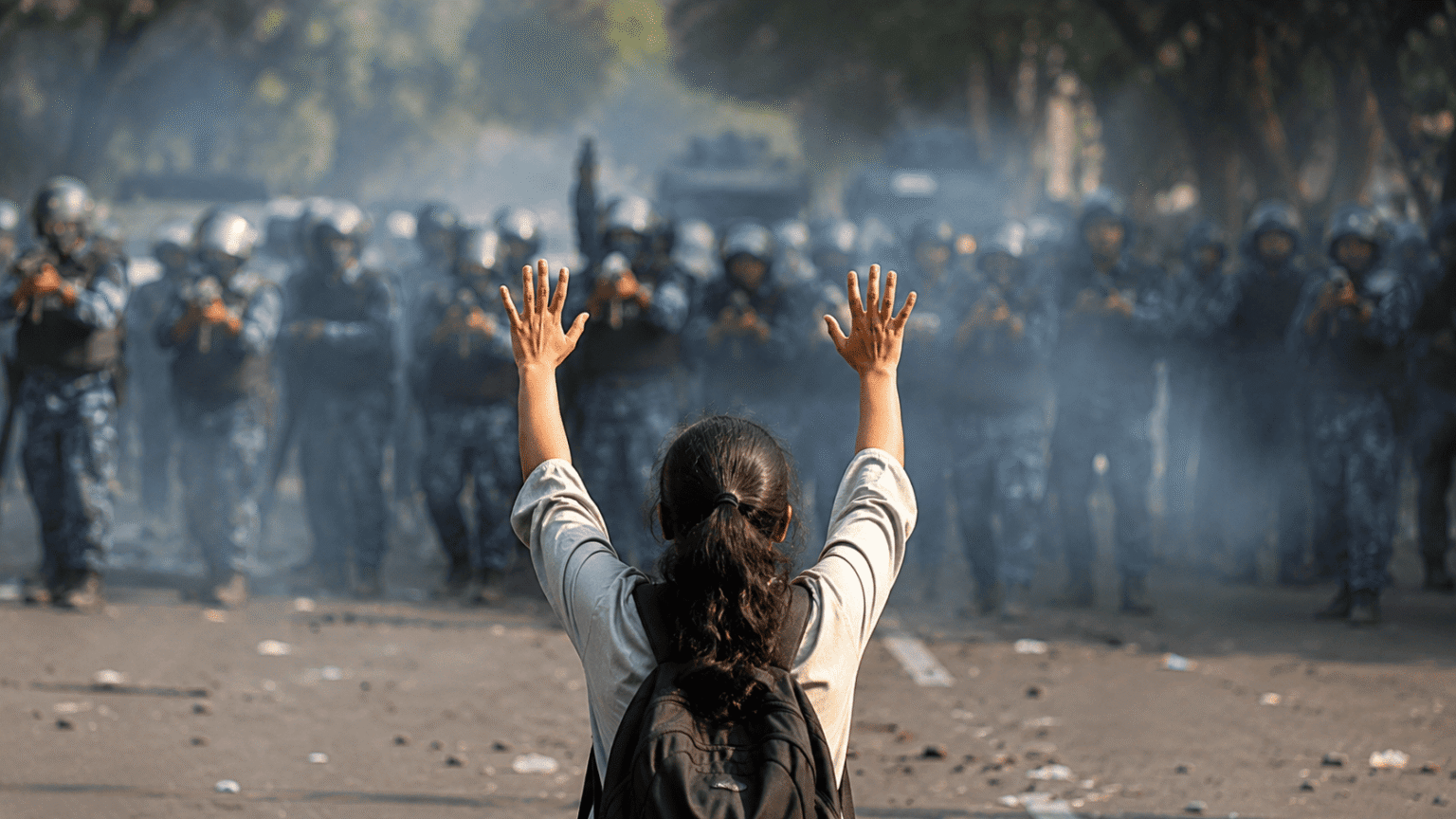

T G Mohandas’ recent statement regarding shooting at students who were protesting has revealed the existence of an unsettling political rhetoric in India, where dissent has become an act that must be squashed rather than being a democratic expression of opinions. The state police of Kerala have registered a complaint against the alleged statement he made in regard to the NEET protest, after which he was arrested.
The most inflammatory aspect of the scandal does not lie in the arrest itself but rather in what these statements say about the political environment that exists around the right-wing politicians. According to Mohandas, there was a situation where protesters received three chances before police opened fire, killing and injuring people as a way to bring back order. Moreover, Mohandas used extremely derogatory language toward the female protesters. This kind of language cannot be regarded as a simple political disagreement; it promotes the use of violence against civilians.
Despite the claims made by the RSS in this regard, they have tried to dissociate themselves from Mohandas by saying that whatever he said was of his own and that he does not hold any post in RSS.
However, there is still a doubt in people’s minds as to whether mere dissociation from the rhetoric in question after causing a ruckus among the public suffices. The fact remains that Mohandas has been associated with the intellectual circle of BJP for long.
What the BJP and RSS must now do is face up to a bigger challenge of democracy: whether political power will be exercised to protect the freedom of students to protest or whether violence towards protesters will become an accepted part of politics in India. “Shoot the students,” when it becomes part of politics and not a red line for democracy, the loss is that of the rule of law.
