



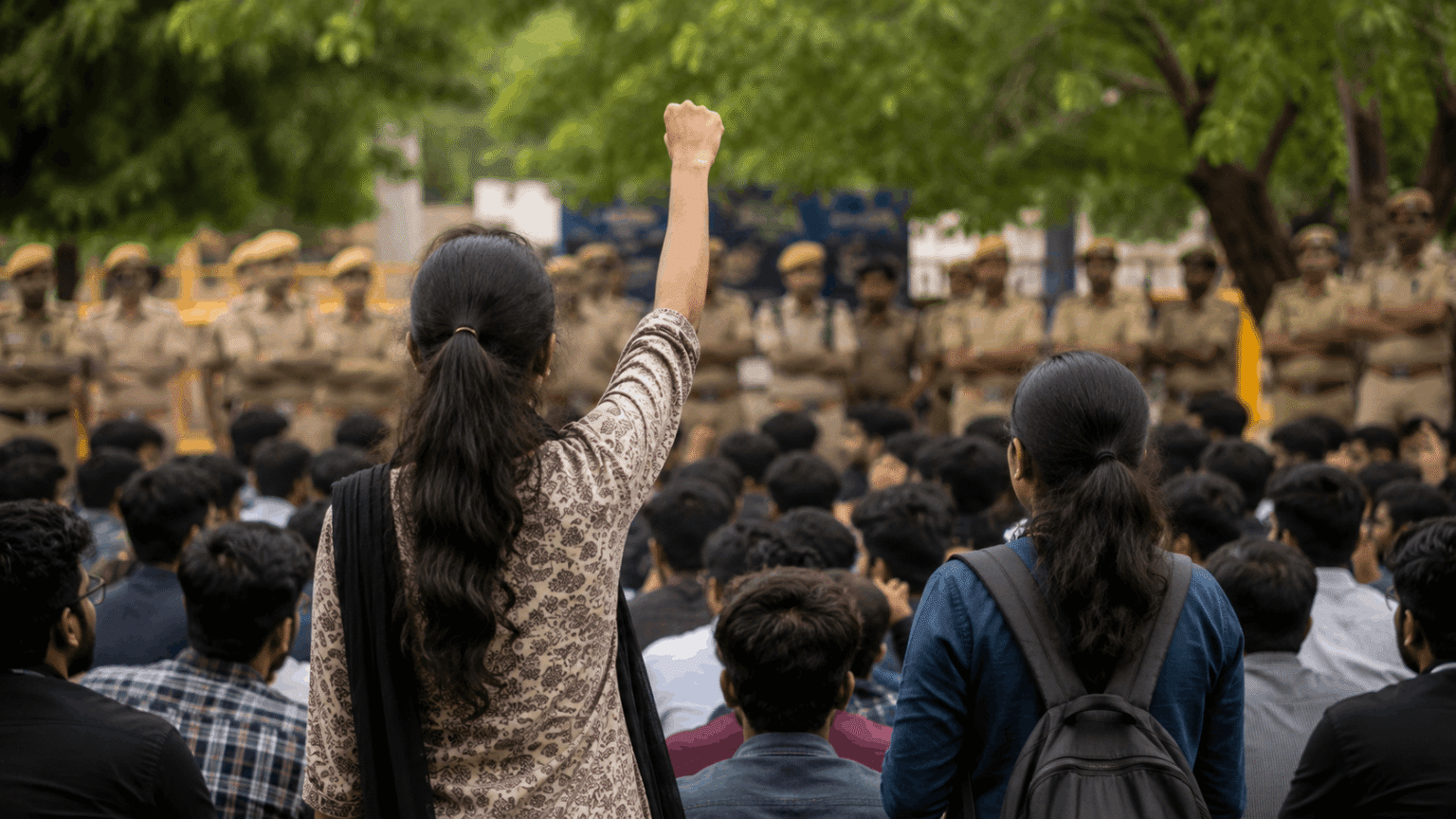

The announcement by the Vijay government about the cancellation of its directive banning students from attending any political protests has brought about the need for asking a very important question, i.e., why did the government issue such a directive in the first place? The directive, issued & immediately revoked on August 19, asked the colleges and other institutions to coordinate with the police and district administration in order to keep the students away from any political demonstrations or agitation.
Students are not just passive subjects of education; they are citizens who have the right to voice their opinions politically, join peaceful protests, and get involved with topics concerning the society. The threat of monitoring or hindering students from engaging in politics through the use of administrative systems is likely to foster an atmosphere of fear within university premises. Participation in politics should not always be regarded as misconduct based on inconvenient views held by the powerful people.
But then again, the decision is certainly welcome, but it doesn’t make any of the questions asked about the initial decision go away. Why was it necessary to get the police and the local administration involved in monitoring the political participation of the students? What made the government decide on issuing such an order? And why did it become necessary to target political demonstrations instead of illegal acts?
The other issue that the episode brings into focus is the dangerous paradox here. A government that had promised to bring about political reform and a fresh way of doing things needs to be extra cautious when it comes to safeguarding the democratic space. An attempt to curtail peaceful political involvement can very well be seen as stifling dissent.
Vijay’s government’s reversal clearly indicates that student pressure and public opinion can save democracy. However, this government should now make it clear why the earlier ban was made and also convince the students that their peaceful involvement in politics is not going to be under scrutiny by the authorities. Democracy cannot be saved by gagging the youth who challenge authority.
